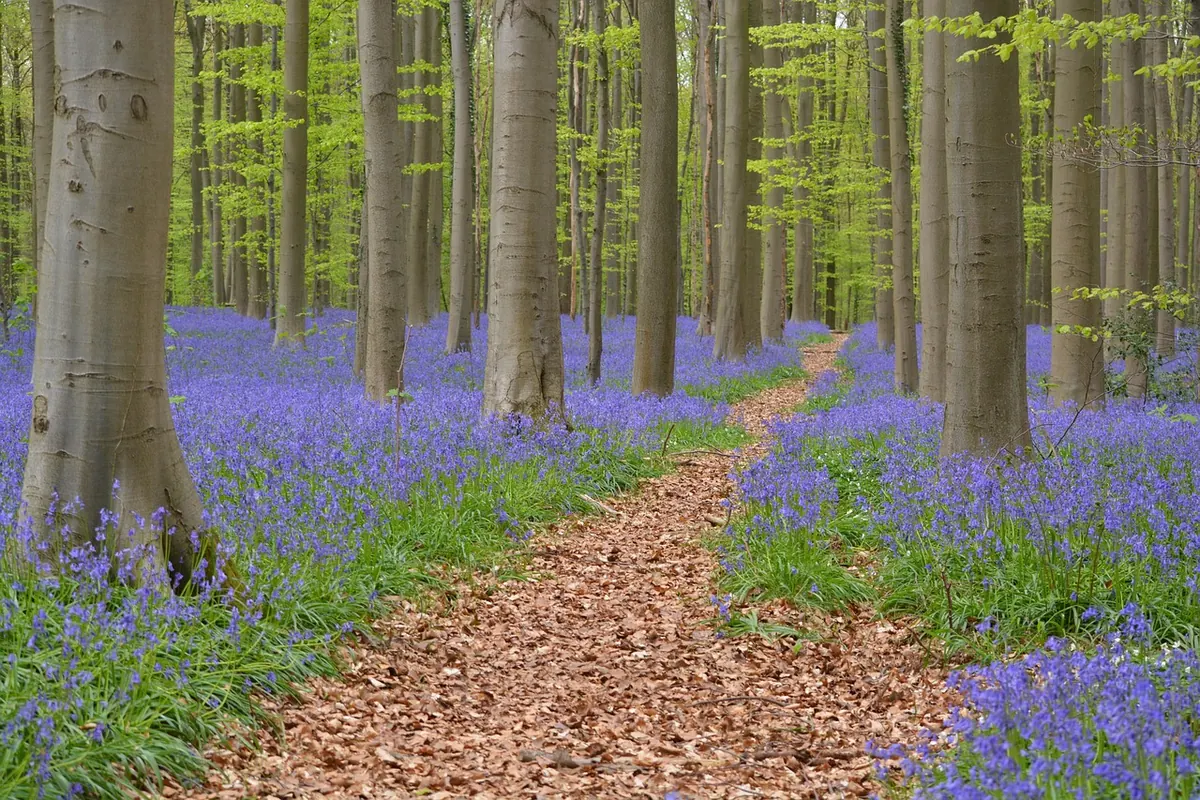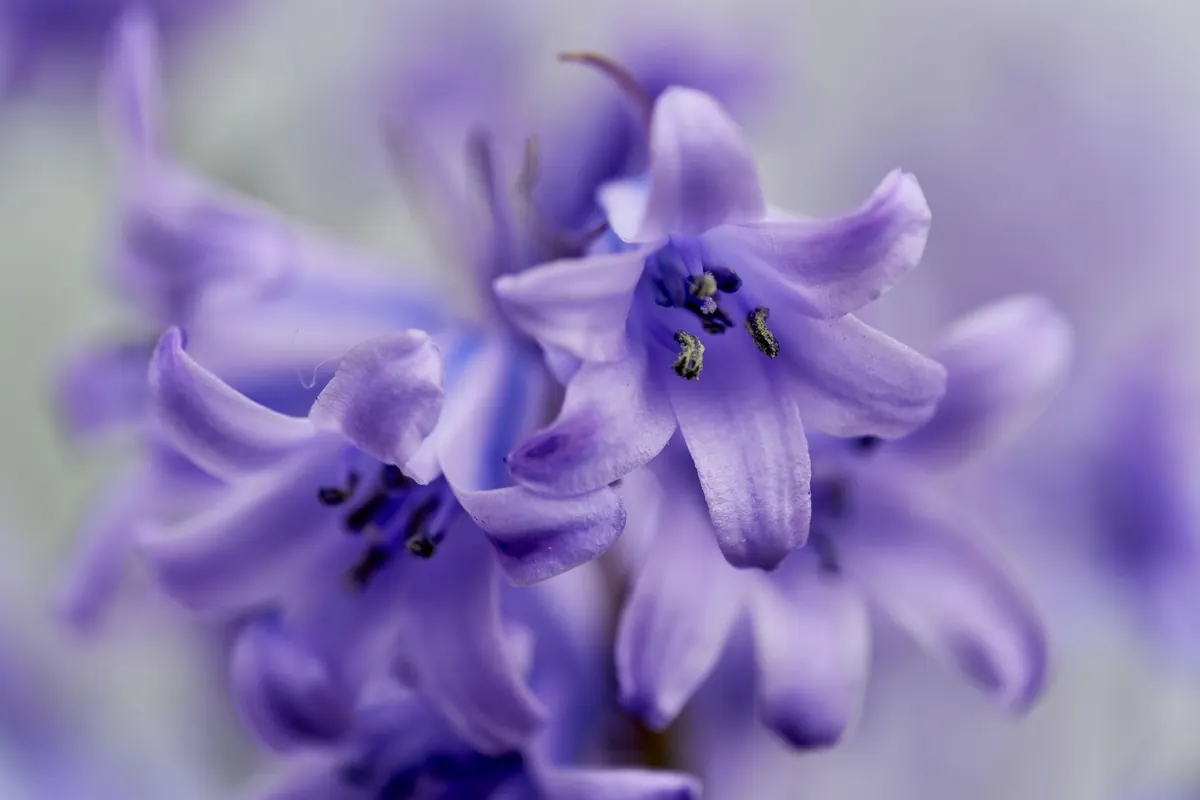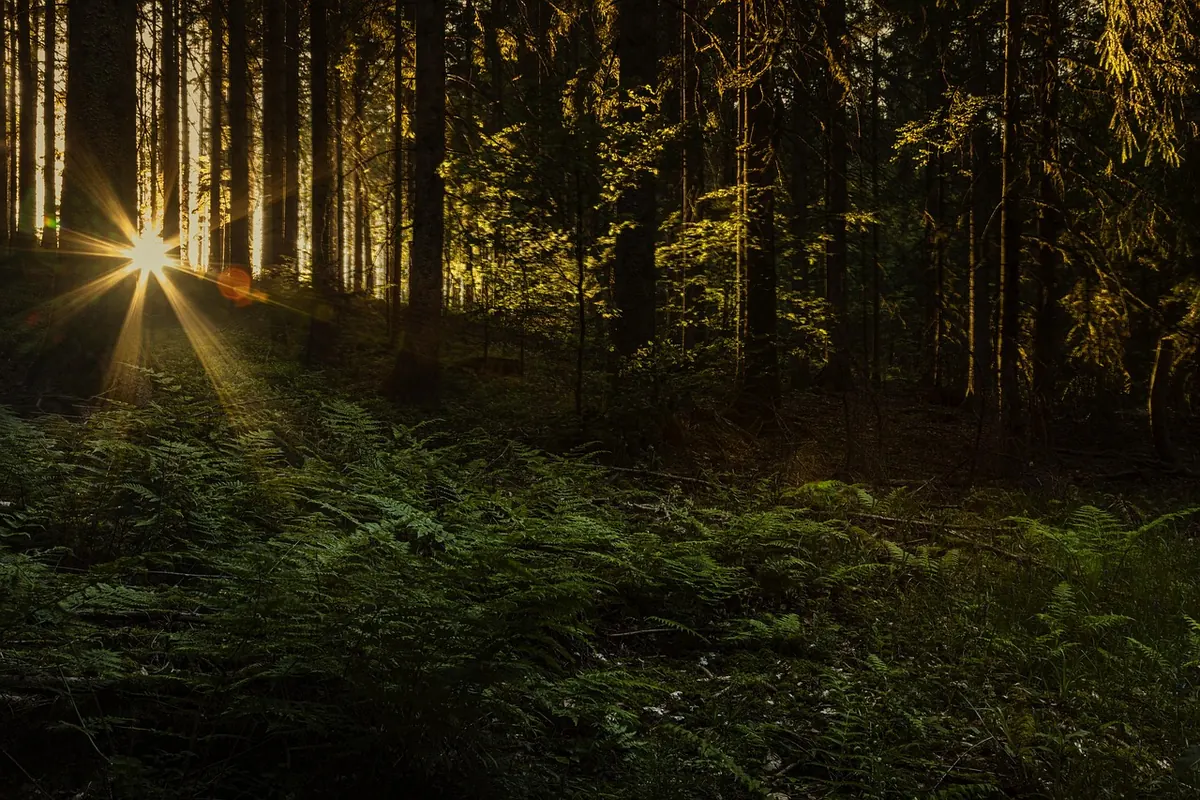
Bluebells and ferns want the same conditions: dappled light, soil that stays cool and slightly damp, and a mulch of last year's leaves. Get those right and a shady border almost designs itself in May. The harder job is making it look deliberate in July.
What follows is a layout and planting approach for a woodland border that peaks while the bluebells are open, with ferns doing the structural work before, during and after.
Read the Site Before You Draw Anything
The question is not "how shady is it" but "when does the shade arrive". A border under a mature oak has good light from February to early May, then closes over. That is a woodland spring, and it suits bluebells perfectly. A border in the shadow of a north wall is dim all year, and you will need to lean far harder on evergreens and foliage.
Check three things:
- Moisture. Bluebells rot in waterlogged winter ground. On heavy soil, work in composted bark and grit, and consider raising the bed slightly.
- Root competition. Under trees, the topsoil is a mat of fine roots. Don't dig deep — plant into pockets of improved soil and mulch each autumn instead.
- Soil reaction. Native bluebells favour slightly acid to neutral soil. On chalk they grow, but shorter and finish faster.
Lay Out Drifts, Not Rows
Bluebells look wrong in straight lines and right in drifts — soft-edged patches that follow the ground the way a shadow does. Run a hosepipe across the border and move it until the shape looks like something water would leave behind: wide at one end, tapering out. Repeat that shape two or three times at different scales so the eye reads a rhythm rather than one blob.
A few layout rules that hold up:
- Keep the largest drifts in the middle distance, where their edges soften into the ferns behind them.
- Put smaller, denser drifts at the front, so you can look down into the flowers from a path or step.
- Turn the widest part of a drift toward your main viewpoint. Bluebells present better at a slight angle than head-on.
- Break drifts with fern fronds rather than bare earth. Empty ground reads as a gap; a fern reads as a seam.
Build Colour in Layers, Not Clumps
The border has one dominant colour, and everything else either supports it or argues with it. Support comes from quiet things: white, cream, silver, soft yellow, pale green. Argument comes from hot orange, scarlet and magenta. One bright red tulip in a drift of blue will pull the whole planting apart.
Think in three vertical layers:
- Canopy, 2m and up. Unfurling shrub and small-tree foliage — hazel, dogwood, viburnum — supplies dappled light and a backdrop. Keep it airy; dense shade kills the flowers beneath.
- Mid layer, 40–90cm. Fern croziers, epimediums, pulmonarias, hellebore foliage, foxgloves. Bluebells thread through this.
- Ground layer, 0–30cm. Bluebells, wood anemones, primroses, cyclamen, small tiarellas.
Layering colour the same way gives you a border that reads clearly from twenty metres and rewards a close look. White wood anemones scattered through the blue act like a highlight — they lift it without competing.
Choose Ferns for Structure and Season
Ferns are what make this a border rather than a flowerbed. They fill the space the bluebells leave once the seed pods form, and several look good through winter.
- Dryopteris filix-mas (male fern) — the reliable all-rounder. Semi-evergreen, tolerant of dry shade once established, a substantial shuttlecock of fronds by June.
- Polystichum setiferum (soft shield fern) — evergreen and fine-textured, excellent under deciduous trees.
- Polypodium vulgare (polypody) — small, evergreen, happy in shallow soil, useful at the front and around tree roots.
- Dryopteris erythrosora — new fronds open coppery pink before greening, a beautiful foil for blue in late April.
- Athyrium niponicum var. pictum (Japanese painted fern) — silver and burgundy, slower and thirstier. Use it as an accent, not a filler.
- Matteuccia struthiopteris (shuttlecock fern) — lovely, but it runs. Give it room, or sink a barrier.
Clump-forming species give you control; running species give you speed. Decide which you want before planting, because moving an established Matteuccia is a chore.
Combinations That Work
- Bluebells under Helleborus x hybridus: the leathery foliage stops the border looking bare once the blue dies down.
- Wood anemones and pale primroses scattered through the front metre of a drift — white and soft yellow low, blue behind.
- Pulmonaria 'Blue Ensign' with male fern: flowers as the croziers unfurl, silver-spotted leaves carrying into summer.
- Epimedium x perralchicum along a path edge, its young bronze leaves echoing Dryopteris erythrosora.
- Geranium macrorrhizum as a scented, weed-suppressing carpet around the outer edges.
- Foxgloves and Thalictrum for height in late May and June, seeding where they like it.
Planting and the Two Rules of Maintenance
Clear perennial weeds first. Ground elder and bindweed will not politely agree to be crowded out, and once a drift is in place you cannot fork them out without spearing bulbs.
- Work in leafmould or composted bark, plus grit on heavy soil — about 5cm mixed into the top layer.
- Plant bulbs 10cm deep and 10–15cm apart, in the drift shapes you drew. Buy from a reputable nursery; never lift them from a wood.
- Or plant "in the green" in spring. It establishes faster than dry bulbs and costs more.
- Mulch with leafmould each autumn and leave fallen leaves where they land unless they are smothering small plants.
- Cut nothing back early. Foliage needs at least six weeks after flowering to feed the bulb or crown. That floppy brown stage is the price of next year's display.
Divide congested fern crowns every three or four years in early spring, before the croziers unfurl. Water new plantings through their first dry spell, then leave them be.
Carrying the Border Past June
The bluebells will be over in three weeks. If nothing else is in the bed, you
Photo: mila-del-monte / Pixabay