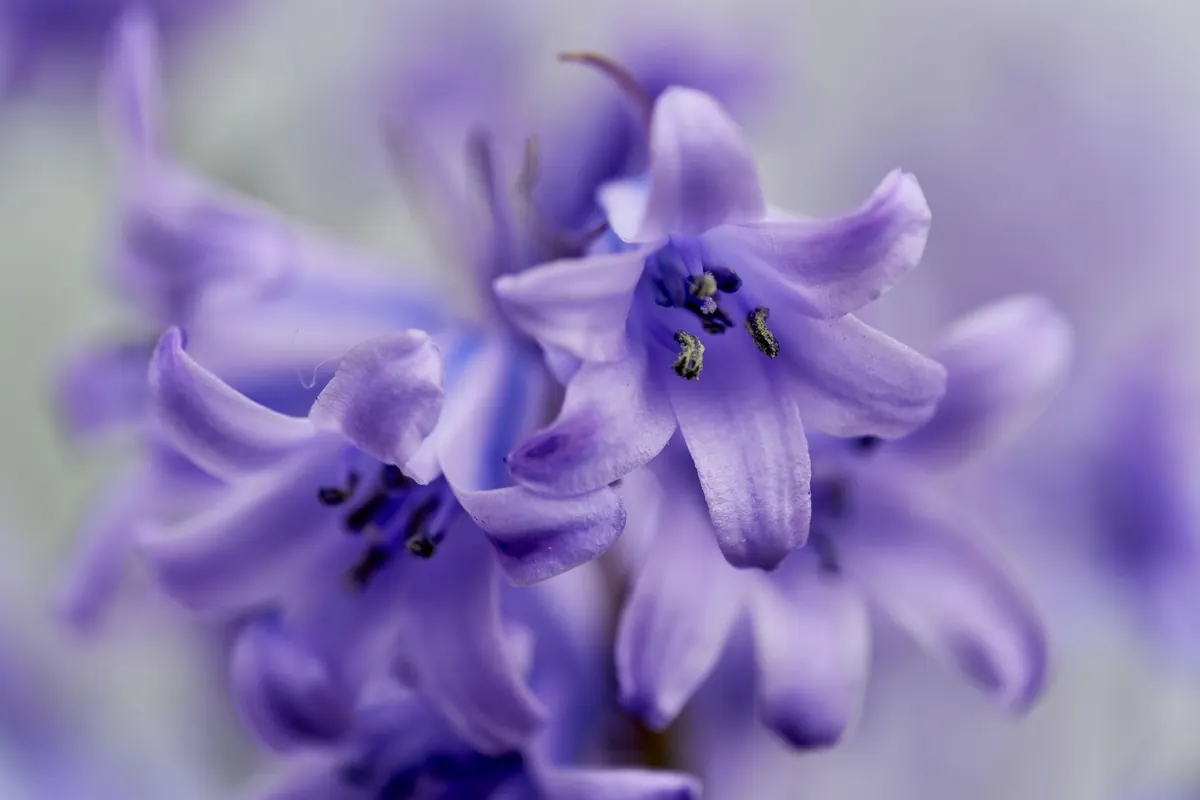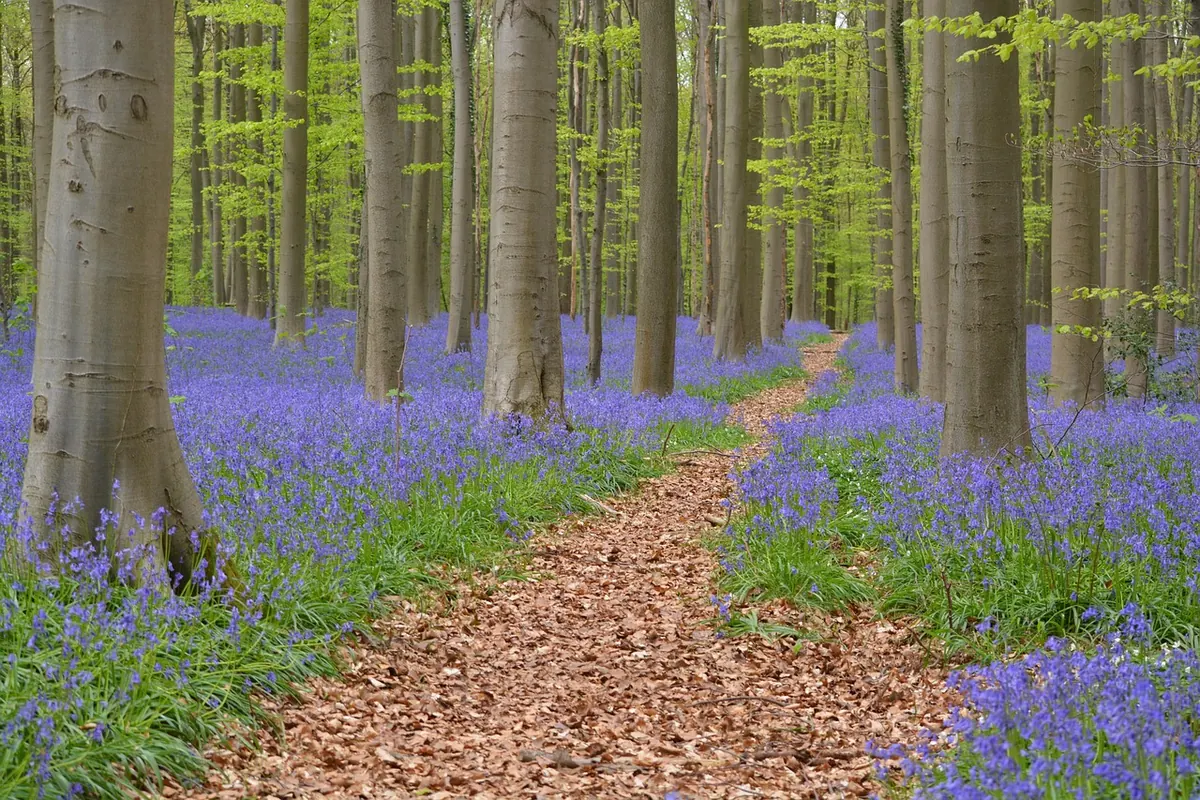
For two or three weeks each spring, a good bluebell wood does something no garden border can copy. The floor turns violet, the light comes down green through new leaves, and the whole place smells faintly sweet and damp. It is one of the best free shows in the gardening calendar.
It is also one of the most easily ruined. A wood in full flower draws a lot of people into a very small window, and the plants are far more delicate than they look. A single shortcut through a clump can damage bulbs that took years to reach flowering size. The good news is that enjoying a bluebell wood properly takes almost no extra effort — just a few habits worth learning before you park the car.
Why a Bluebell Wood Is More Fragile Than It Looks
Our native bluebell grows from a bulb buried well below the surface, and it does most of its yearly work in a short burst. Leaves appear, flowers open, and then the foliage lingers for a few weeks doing the quiet job of storing energy for next spring. Only after that does it die back and disappear.
That means the leaves matter as much as the flowers. Crush them, cut them, or trample the soil around them and the bulb goes into the next season with less in the bank. Compacted ground also makes it harder for seed to settle and grow, which is slow work at the best of times. Bluebells are one of the classic indicators of ancient woodland — sites that have been continuously wooded for centuries — and those places support a whole community of nesting birds, insects and fungi alongside the flowers.
There is a genetic issue too. Garden varieties, particularly the Spanish bluebell, cross readily with our native plants. Bulbs dumped over a hedge or soil tipped at the edge of a wood can blur a population that took a very long time to establish.
Pick Your Moment, and Pick Your Wood
Bluebell season generally runs from mid-April into late May, but it moves. Woods in the south and west tend to go over first; northern sites and higher ground can be a fortnight or more behind. Any single wood is usually at its peak for only two or three weeks, so it pays to check local sightings, a wildlife trust page, or a friend who walks there regularly before making a long drive.
Timing your visit within the day matters just as much. Early mornings are quiet, and overcast light is genuinely better for photography than bright sun. A weekday evening after work can be emptier than a Saturday at eleven. Light rain is no bad thing either — wet bluebells photograph beautifully and most people stay home.
Where possible, choose a wood that is set up for visitors: a marked trail, a proper car park, a donation box or small entry fee. Those sites channel footsteps onto durable ground, and your entry money funds the wardening that keeps the flowers coming back.
Walk as if the Path Matters
Mud is a durable surface. A flowerbed is not. That is the whole logic of footpath etiquette in a bluebell wood, and it explains why you should stay on the trail even when it is wet, churned, or longer than the shortcut.
- Walk single file on narrow trails so the edges do not creep outward season by season.
- Skip the shortcut, however tempting. The flattened patch you leave becomes the place the next person steps.
- Respect rope and closure signs. They are usually there for regeneration, not to spoil your day.
- Do not move deadwood or stones to clear a view. Fallen branches are habitat, not clutter.
- Step aside to let others pass rather than standing across the path to talk.
If a path is genuinely impassable, turn back. There is always another route next weekend, and no photograph is worth a new desire line through a carpet of bulbs.
The path is not a compromise. The path is the reason the wood will still be blue in five years.
Photographing Bluebells Without Flattening Them
Work the edge of the path
You do not need to stand in the middle of the display. Crouch at the path edge, rest the camera or phone on the ground, and shoot along the line of flowers rather than into them. Most of the pictures you have seen of a "sea of blue" were taken from a metre inside the trail, not a hundred metres off it. A longer lens — or the two-times or three-times setting on a phone — compresses the distance and makes a narrow strip look like an entire hillside.
Managing light and steadiness
Woodland is dark. Midday sun makes harsh patches and deep shadows, so shoot on a cloudy day or in the soft hour after sunrise. Brace your phone against a trunk, use burst mode, or bring a small tripod — but keep the legs on the path. If you use a tripod, be aware that other walkers will need to get past you, so set up where there is room.
Leave the flowers where they are
Do not pick a bloom to photograph it, bend a stem out of the way, or brush leaves aside for a cleaner frame. If a flower is in your way, move your feet, not the plant. Drones are prohibited at many reserves and woodland sites, and low flying disturbs birds and animals even where it is allowed, so check the site's rules first.
Dogs, Children and Picnics
Spring is the season for ground-nesting birds, young deer and other easily startled wildlife, which is why most woods ask for dogs on a lead between roughly March and late summer. A dog off the path does more damage in ten seconds than a family of four does in an hour.
With children, swap "don't touch" for a game: count how many white bluebells you can find, listen for which birds are singing, or spot the different greens of the mosses. Keep picnics to benches, gates and clearings rather than sitting among the flowers, and take every wrapper and apple core home. Disposable barbecues have no place in woodland at any time of year.
Leave No Trace: The Small Things That Add Up
- Take all litter home, including peel and anything labelled biodegradable.
- Pick nothing, and never dig a bulb. In the UK, uprooting wild plants without the landowner's permission is an offence, and bluebell bulbs are specifically protected against wild collection for sale.
- Leave deadwood, stones and fungi where they lie; they are part of the wood, not decorations.
- Do not build dens, cairns or fairy gardens in an ancient wood, and do not carve or paint trees.
- Never dump garden bluebells, spent compost or soil in or near woodland.
- Clean your boots between visits if you are touring several woods, to avoid carrying soil-borne disease from site to site.
- Close gates behind you and follow any marked diversion rather than routing around it.
If you spot someone digging bulbs or damaging a site, do not confront them. Note the location and pass it to the landowner, the local wildlife trust or the site's volunteer group, who can deal with it properly.
If You Want Bluebells in Your Own Garden
The right way to get them is to buy cultivated native bluebell bulbs or plants from a reputable supplier and plant them in autumn, in a spot that mimics woodland — dappled shade, soil rich in leaf mould, and a patch you are happy to leave alone while the leaves die back. Do not lift bulbs from a wood, and do not accept a bag of dug bulbs from anyone else, however well meant. Ask your supplier to confirm they are the native species, and check your own local rules if you garden outside the UK.
A Simple Plan for the Day
Check the wood's website the night before, arrive early, and park only where you are meant to. Put your boots on the path and keep them there, however good the shot looks from three steps to the left. Take your photographs from the edge, take your litter home, and leave the flowers to set seed for next year's display. Then tell someone else which wood you visited — word of mouth is how these places find the volunteers and donations that keep them blue.
Photo: Ben_Kerckx / Pixabay