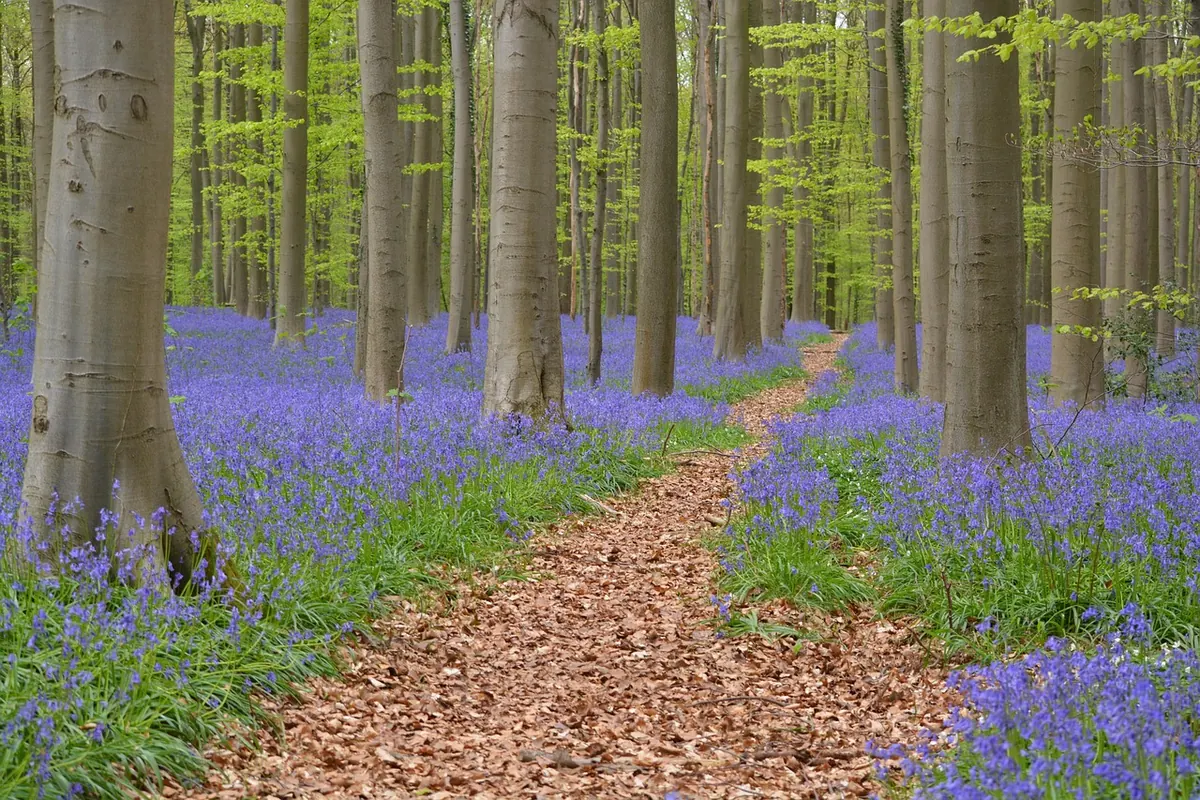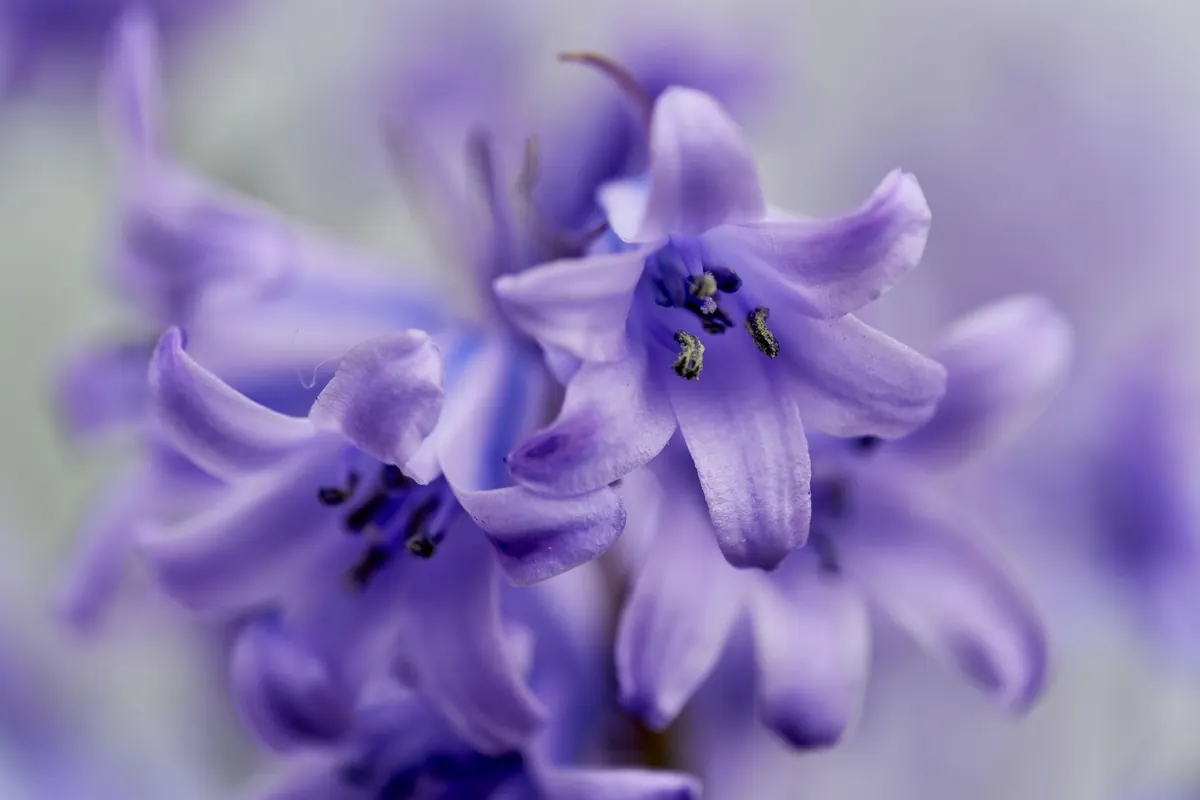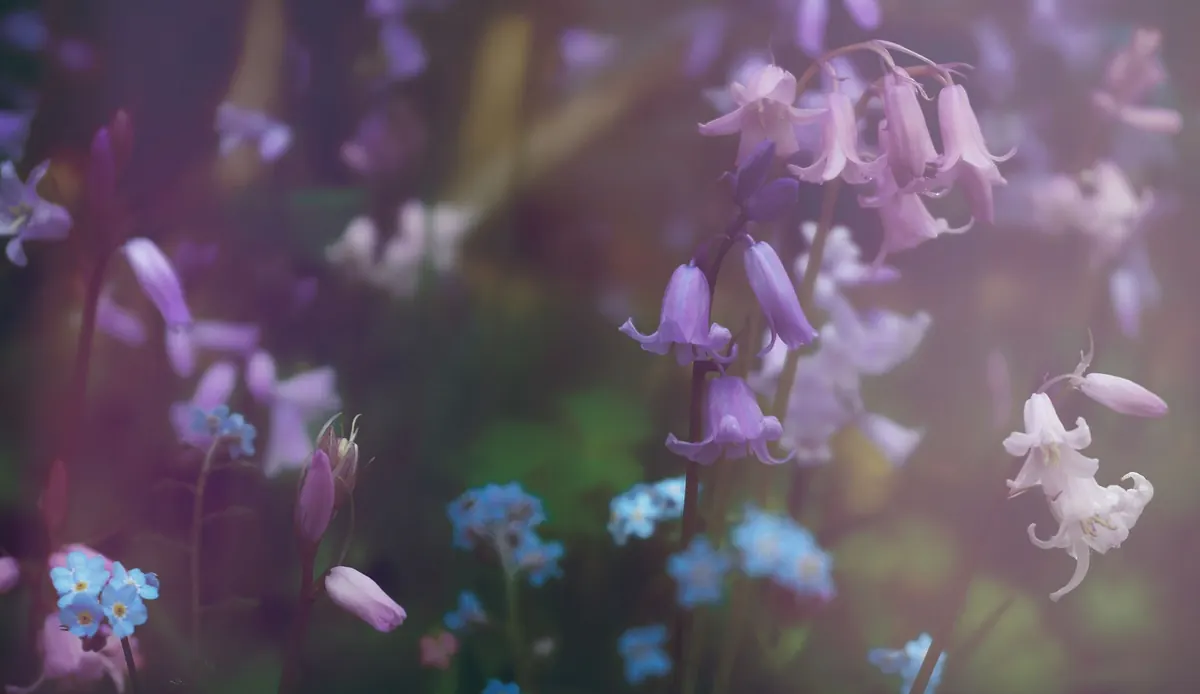
Bluebells are one of the few flowers that look better in quantity than in isolation. A single bulb is quiet, almost shy. A hundred of them, drifting under a hedge or threading through rough grass, is the kind of spring that people plan trips around. And the strange thing is that most of the work happens in autumn, on a cool afternoon, with a trowel and a bag of bulbs.
Get the timing, depth, and spacing roughly right and bluebells will settle in, multiply, and come back for decades. Get them wrong and you will spend the next spring staring at a patch of leaves and nothing else. Here is how to do it properly.
Know Which Bluebell You Are Planting
Before you buy, decide what you actually want, because the two common options behave very differently.
English bluebell (Hyacinthoides non-scripta) is the native, arching, deeply scented one. The flowers hang to one side of the stem, which gives a bluebell wood its characteristic nodding, one-directional look. It spreads steadily by seed and offset, and it is the best choice for naturalising under deciduous trees or in long grass. It is also, unfortunately, the one most often mislabelled in garden centres.
Spanish bluebell (Hyacinthoides hispanica) is bigger, more upright, with flowers arranged around the whole stem and almost no scent. It is vigorous, tolerates drier shade, and will happily cross with native bluebells, which is why many gardeners keep it out of the countryside and use it only in town gardens.
If you want a spring carpet in a border or a lawn, choose one and stick with it. Mixing them looks muddled and encourages hybridising.
When to Plant: Timing Matters More Than You Think
The window is roughly late September to early December, with October and early November being the sweet spot in most temperate climates. The goal is to get bulbs into the ground while the soil is still warm enough for roots to grow but before hard frost seals the surface.
Bulbs planted too early, in warm, wet soil, can rot. Bulbs planted after the ground has frozen will sit dormant and produce a weak, late display. If you have missed the window and the soil is already frozen, pot the bulbs into containers of moist, gritty compost and keep them somewhere cold but frost-free, then plant them out in early spring or leave them in pots for the season.
If you are buying dry bulbs by post, plant them the week they arrive. They lose viability sitting in a paper bag on a shelf.
Preparing the Soil So It Drains
Bluebells are woodland plants, and woodland soil is usually crumbly, humus-rich, and free-draining. That is the target.
They dislike heavy clay that holds water through winter and dries to concrete in summer. If that describes your garden, do not despair, but do improve the planting area rather than just dropping bulbs into it.
- Clear the ground. Remove perennial weeds, especially couch grass and bindweed roots, before planting. Once a bluebell carpet closes over, weeding becomes difficult.
- Break up compacted soil to a spade's depth, at least 20 cm (8 inches) down.
- Add organic matter. Two to three inches of leafmould, well-rotted garden compost, or bark fines worked into the top layer improves both drainage and moisture retention.
- Add grit on clay. On heavy ground, mix in horticultural grit to open the structure. Raising the bed slightly also helps.
- Check the pH. Bluebells prefer slightly acid to neutral soil. They will grow in mildly alkaline ground but look less happy.
Do not add fresh manure or a high-nitrogen fertiliser at planting. It encourages soft leaf growth and can burn new roots. A handful of bone meal or a general bulb fertiliser worked into the base is plenty.
How Deep and How Far Apart
Depth is the single most common mistake. The rule for almost all bulbs: plant them at roughly two to three times their own height.
Bluebell bulbs are usually 3 to 5 cm tall, so aim for a planting depth of 10 to 15 cm (4 to 6 inches) measured from the base of the bulb to the soil surface. In light, sandy soil, go to the deeper end. In heavy clay, plant a little shallower, around 8 to 10 cm, so emerging shoots are not fighting waterlogged soil.
Spacing depends on the effect you want.
- For a dense carpet quickly: 8 to 10 cm (3 to 4 inches) apart.
- For naturalising over a few years: 12 to 15 cm apart, letting them fill the gaps themselves.
- In grass, aim for drifts rather than rows. Scatter a handful of bulbs and plant them where they land, which always looks more natural than a grid.
Plant with the pointed end up and the flat, rooty base down. If you cannot tell which end is which, lay the bulb on its side. It will right itself.
Planting in Beds and Borders
For borders, work in groups rather than single bulbs. Use a bulb planter or a trowel and dig a broad hole rather than individual narrow ones, which allows you to set several bulbs at once and backfill with loose soil.
Bluebells look best under deciduous shrubs and trees, where they get sun in spring before the canopy closes, then shade and dry conditions in summer. They also mix well with ferns, hostas, and epimedium. Avoid planting them among vigorous ground cover such as ivy or pachysandra, which will outcompete them.
A note on dormant bulbs
If you buy bluebells "in the green" (lifted and sold with leaves still attached in spring), plant them immediately at the same depth, water them in, and let the foliage die back naturally. In-green bulbs establish faster than dry ones, though they are more perishable in transit.
Naturalising in Grass
This is where bluebells earn their reputation. The technique is simple, but the maintenance is where people slip up.
- Choose rough grass that is not mown short year-round, ideally a meadow area or a strip along a hedge or fence.
- Lift a flap of turf with a spade, fork the soil beneath, set the bulbs, and fold the turf back.
- Press the turf down firmly and water if the weather is dry.
- Leave the area unmown from the moment the first shoots appear until at least six weeks after flowering ends.
- Once the leaves have yellowed and flopped, mow it down and remove the cuttings.
That six-week wait after flowering is not optional. The leaves are the bulb's only chance to store energy for next year, and cutting them early is the fastest way to lose a bluebell patch. Mark the area with a few discreet canes if you share a garden with an enthusiastic mower.
After Planting and Through the First Year
Water newly planted bulbs if autumn is dry, but do not keep the ground soggy. A mulch of leafmould over the surface helps suppress weeds and keeps moisture even.
Expect modest results the first spring. Newly planted bulbs often flower sparsely while they establish roots. Year two is better, and year three is when a properly planted drift starts to look like something worth photographing.
Squirrels and mice dig up fresh bulbs, particularly in light soil. If that is a problem, lay a sheet of chicken wire just under the soil surface over the planting area, or plant in pots sunk into the ground and lift them after flowering.
Making It Last
Bluebells want one thing above all else: to be left alone. Once they are in, resist the urge to lift, divide, or tidy them constantly. Let the foliage die back on its own, keep the area free of smothering weeds, and top-dress with leafmould every couple of years rather than feeding heavily.
Plant a few dozen bulbs this autumn, in drifts rather than rows, at the right depth, and then wait. A bluebell carpet is not built in a season. It is built in the quiet years between one spring and the next, and it gets better every time.
Photo: Suzy Hazelwood / Pexels