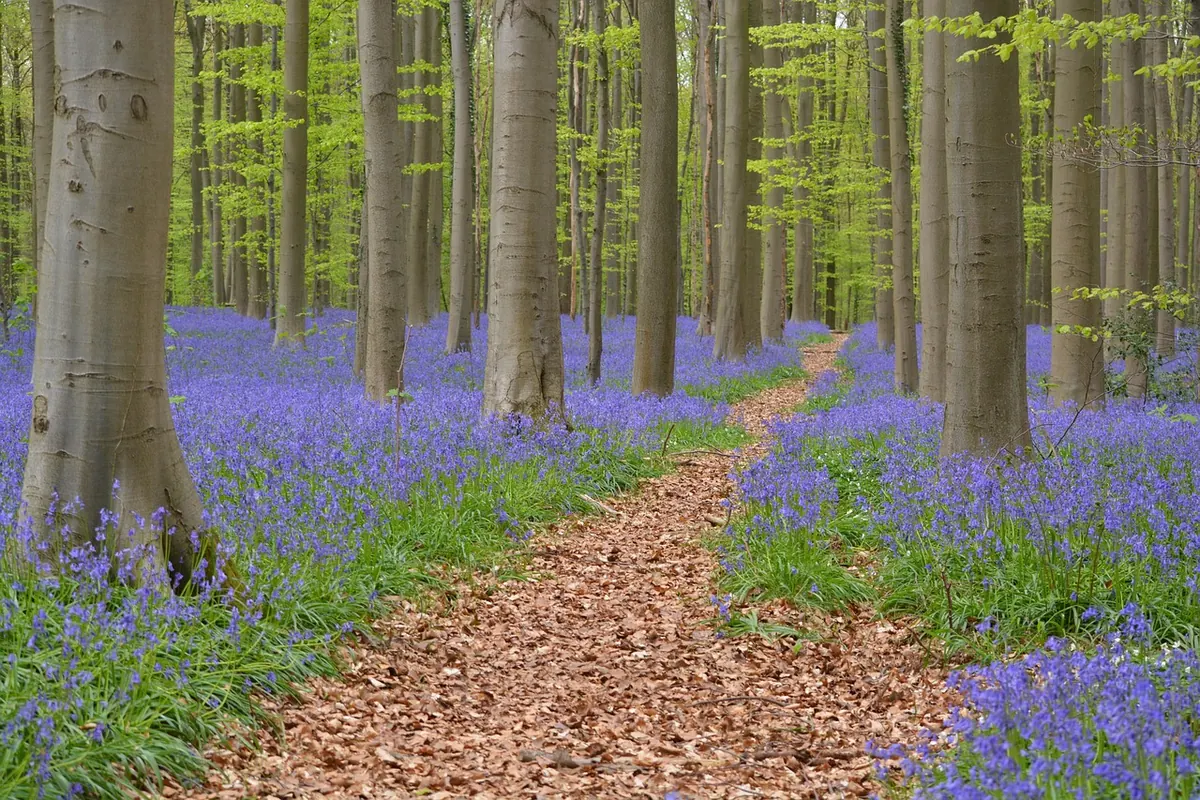
Bluebells do one thing beautifully and then vanish. For three or four weeks in late April and May, a patch of them under a deciduous tree is as good as gardening gets. By July the ground is bare, the leaves have yellowed and flopped, and the spot looks as though nothing ever happened there. The answer is not more bluebells. It is neighbours whose seasons sit on either side of them, so the same square metre of shade carries colour from January to October.
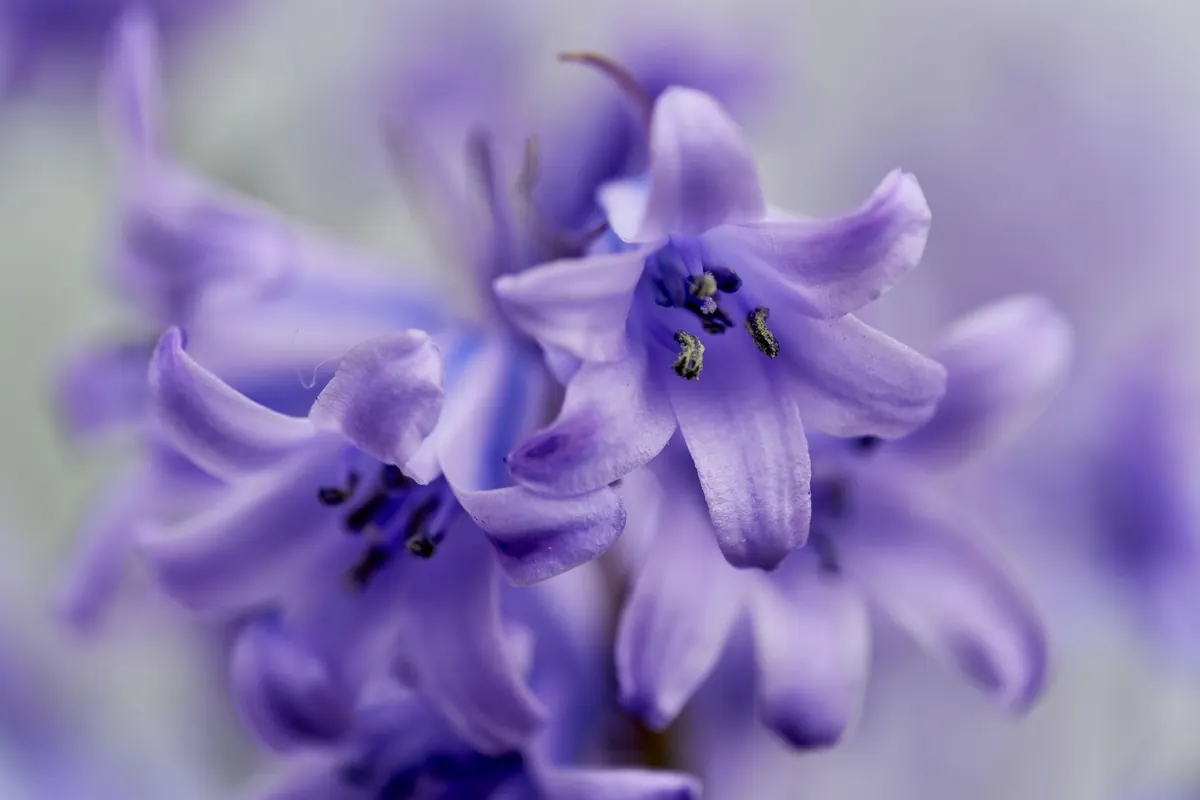
Native bluebells (Hyacinthoides non-scripta) want dappled shade, soil rich in leaf mould, and ground that is largely left alone. They resent digging, they need their foliage intact for about six weeks after flowering, and in the UK the wild plant is protected, so buy cultivated bulbs rather than lifting anything from a wood. Get those basics right and the planting plan below does the rest.
Why Bluebells Need Companions
A bluebell-only planting is a month of magic followed by eight months of nothing. The bulbs sit dormant and invisible from midsummer onwards, which means the ground above them is free for other plants, as long as those plants do not demand annual digging and do not smother the bluebell leaves while they are still working.
Think in three phases. Something interesting before the blue, something sharing the moment with it, and something that takes over once the blue has gone. Then repeat that rhythm in every clump, rather than planting one block of spring bulbs and a separate bed of ferns.
There is a second reason, less romantic but just as real. Woodland plants look better in company. A single hellebore in a bare border reads as a stray; the same hellebore among lungwort and epimedium reads as a community. Bluebells are the loudest note in that community, and loud notes need something underneath them.
The Twelve Companions, at a Glance
All twelve are woodland or woodland-edge plants, which matters: they tolerate root competition and summer shade. Listed roughly in order of performance.
- Snowdrop (Galanthus nivalis) — January to February, the first thing to break the grey.
- Winter aconite (Eranthis hyemalis) — February, a low carpet of buttercup yellow.
- Hellebore (Helleborus × hybridus) — February to April; nodding flowers held above evergreen leaves.
- Daffodil (Narcissus) — March to April; choose early and mid-season varieties for the longest run.
- Primrose (Primula vulgaris) — March to May, pale yellow and happiest in damp shade.
- Lungwort (Pulmonaria) — March to May; the spotted leaves keep working all summer.
- Wood anemone (Anemone nemorosa) — April, opening with the first real warmth.
- Epimedium — April to May; small flowers, then handsome heart-shaped foliage.
- Bleeding heart (Lamprocapnos spectabilis) — May to June, arching stems above the fading bluebell leaves.
- Sweet woodruff (Galium odoratum) — May to June, a scented green mat for the front edge.
- Hardy geranium (Geranium phaeum) — May to July; dusky flowers and tidy mounds of leaf.
- Japanese anemone (Anemone × hybrida) — August to October, closing the year in pale pink or white.
Before the Blue: Snowdrops, Hellebores and Daffodils
The trick with the early plants is to place them where you will actually see them in bad weather. That means near a path, a doorstep, or any window you look out of in February, not at the far end of the garden under the hedge.
Hellebores carry the longest shift
Hellebores are the backbone of a woodland border because they flower for weeks, hold evergreen foliage through winter, and look good with everything. Plant them generously, in groups of three or five, about 45cm apart, with the crowns just at soil level. They self-seed gently once settled, and the seedlings are worth leaving where they land. Because hellebore leaves are tough and leathery, they do not compete badly with bluebell bulbs. Cut back the oldest leaves in late winter so the flowers are not hidden.
Choose a range rather than one variety. Dark slate and near-black hellebores look extraordinary against a mass of bluebell blue, while the softer pinks and spotted whites sit more quietly beside spring green. A single plant of each, spread through the drift, will give you flowers from February into April.
Snowdrops and aconites start the year
Both are best moved and planted "in the green" — lifted and replanted while still in leaf, in February or March, when the bulbs are in active growth and settle far more reliably than dry bulbs bought in autumn. Plant them in small drifts rather than neat rows; nothing looks less like a wood than a line of snowdrops. Winter aconites want the same treatment and will seed themselves along a path edge if the ground is left undisturbed. If you already have bluebells, you already have the right soil for both.
Daffodils for the middle act
Daffodils bridge the gap between the aconites and the blue. Choose early varieties for February and mid-season ones for April, and plant them at the back of the bluebell drift, where their dying foliage will be partly hidden by the bluebell leaves. Never tie, braid or cut daffodil leaves while they are green — they are feeding the bulb for next year, exactly as bluebell leaves are. About six weeks of untidiness buys a decade of flowers.
Sharing the Moment: Anemones, Epimedium and Lungwort
The plants that bloom alongside bluebells have to hold their own without crowding. Wood anemone is the most natural partner — it grows in exactly the same woods, at exactly the same time, and its white star flowers lift the blue from a flat carpet into something with depth. Plant it in the gaps rather than in a block of its own, and let it wander.
Lungwort is the most useful of the three because it does not stop when the flowers do. The pink-to-blue flowers fade in May, but the silver-spotted leaves carry on as ground cover right through summer, covering the bare soil the bluebells leave behind. It also tolerates drier shade than most, which matters under a thirsty tree.
Epimedium is the quiet connoisseur's choice. The flowers are small and easy to miss — they need a moment's attention — but the foliage that follows is worth the whole plant: bronze-flushed in spring, heart-shaped and neat through summer, and often semi-evergreen. It knits a drift together at the edges.
If you plant only one companion for bluebells, plant a hardy geranium. It covers the ground after the bluebells have gone, needs no staking, and is quiet enough in spring not to distract from the blue.
After the Blue: Bleeding Heart, Geranium and Japanese Anemone
The hardest job in a bluebell patch is the handover. By early July the bluebell leaves are yellow and flat on the ground, and whatever comes next has to grow through them without looking embarrassed.
Bleeding heart (Lamprocapnos spectabilis) does it with arching stems that rise above the collapsing foliage. It flowers in May and June, then goes dormant in the heat of midsummer — which sounds like a problem and is actually an advantage, because it asks for nothing while the ground is dry and reappears the following spring without fuss.
Geranium phaeum is the workhorse. Dusky purple or white flowers in early summer, tidy mounds of handsome divided leaf, and a tolerance for dry shade under trees that few perennials can match. It seeds about a little, which in a woodland setting is a gift rather than a nuisance. Cut it back after flowering and it will produce a fresh set of leaves for the rest of the season.
Japanese anemone closes the year. Pale pink or white, wiry stems, flowers from August into October when almost nothing else in shade is doing anything. Give it room — it spreads — and plant it where the bare ground of late summer would otherwise be most obvious.
Three Combinations That Work
The doorstep patch
Snowdrops and winter aconite at the front, a hellebore behind, bluebells through the middle, sweet woodruff at the edge. Everything is visible from the door, and the woodruff's scent of new-mown hay carries into the house on a warm May evening.
The long border under a deciduous tree
Mid-season daffodils at the back, bluebells in a broad drift through the centre, epimedium in front of them, and Geranium phaeum with Japanese anemone filling the ground once the blue has retreated. Colour from March to October from a patch of shade most people would write off.
The damp corner
Primroses, lungwort and wood anemone, with bleeding heart rising through them in late spring. These all want the same moisture and the same leaf mould, so nothing sulks and nothing needs watering.
Practical Notes: Spacing, Depth and Timing
- Plant bluebell bulbs in autumn, at least 10cm deep and 10–15cm apart, in irregular drifts rather than rows.
- Set hellebores and epimedium in spring or early autumn, with the crown just at soil level.
- Never cut bluebell foliage before it has yellowed completely — usually mid-June to early July. The bulb is storing next year's flower in those leaves.
- Mark your clumps with a discreet label or cane, because from July to December you will not remember where anything is.
- Top-dress with leaf mould each autumn rather than compost or manure. Woodland plants want the light, leafy, fungal stuff, not rich and heavy.
- Avoid walking over the patch in wet weather. Bluebell bulbs and emerging shoots bruise easily underfoot.
Common Mistakes to Avoid
Most disappointing bluebell plantings fail for one of four reasons, and all four are avoidable.
- Full sun. Bluebells will grow in it, briefly, but the flowers fade faster and the leaves scorch. Dappled shade under a deciduous tree is the goal.
- Autumn digging. Every fork through the bed spears dormant bulbs. Decide the plan once, plant it, and then leave the soil alone.
- Bossy neighbours. Avoid summer perennials that need dividing every year, and anything vigorous enough to smother the bluebell leaves in May. The companions listed here are chosen for their manners as much as their flowers.
- Wild-collected bulbs. As well as being illegal in the UK, they rarely establish. Buy from a reputable nursery, or plant in the green from a friend's over-crowded patch.
Get the structure right and bluebell season stops being a fortnight you look forward to and starts being the centrepiece of a border that earns its space all year. The blue is still the point. It just no longer has to carry the whole performance alone.
Photo: KIMDAEJEUNG / Pixabay