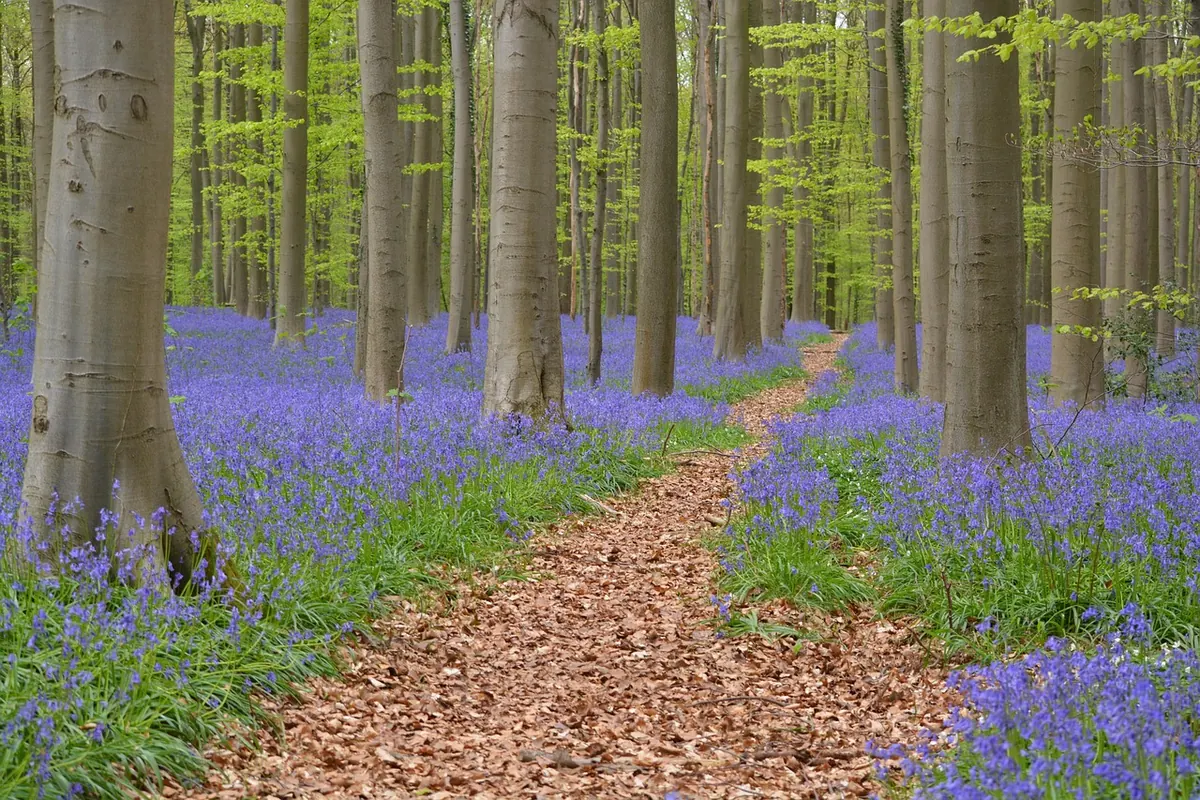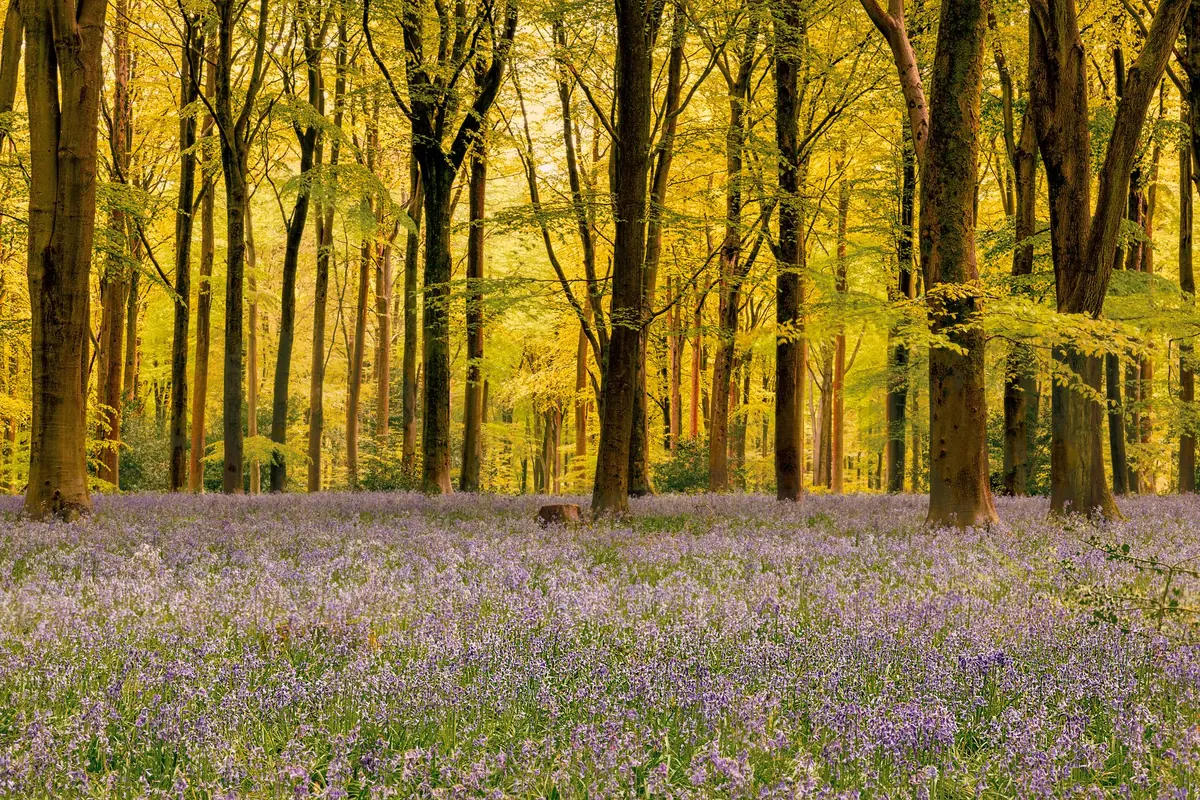
A lawn that looks like a worn carpet for eleven months of the year can earn its keep in April. Bluebells settle into grass that is never fed, rarely watered and mown in the wrong order, provided you work with their season rather than against it. Plant in autumn, keep the mower away in spring, and by the third year you will have drifts instead of dots.
Better still, bluebells go dormant by early summer. They ask for three months of your attention and give you solid green grass for the rest of the year. It is one of the few wildflower projects that actually improves a patchy lawn, because the gaps you already have are exactly where the bulbs will go.
Know Which Bluebell You Have
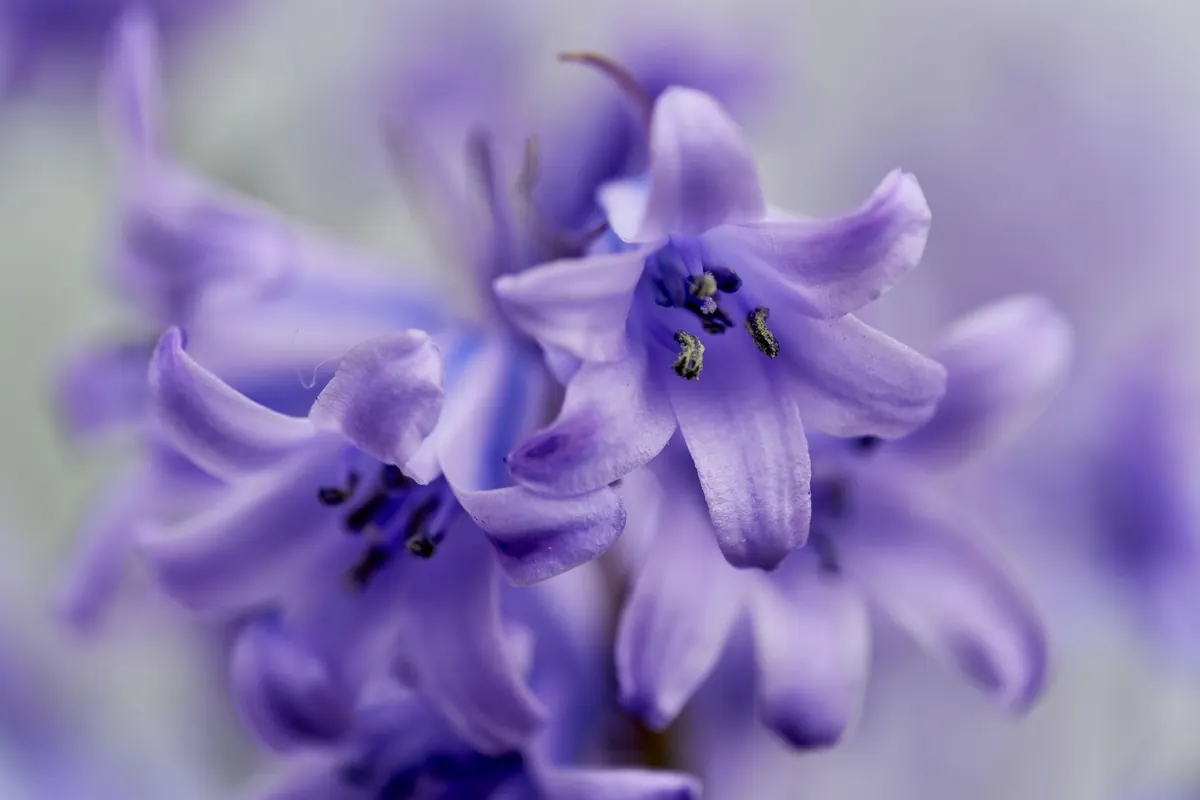
There are two bluebells in British gardens and they behave very differently. Our native Hyacinthoides non-scripta is deep violet-blue, has narrow leaves, and carries its flowers along one side of a stem that curves over like a shepherd's crook. The pollen is creamy white and the scent is strong and sweet. The Spanish bluebell is paler, often pink or white, upright, unscented, with broad leaves and flowers all the way round the stem. The two cross readily, and the hybrids spread.
For naturalizing, buy named native stock or cultivated bulbs from a reputable nursery. Wild bulbs should stay where they are: it isn't legal to dig bluebells from the wild in Britain, and lifted wild bulbs often sulk for years anyway. If you already have Spanish bluebells, dig them out whole after flowering, before they drop seed, and bin the bulbs rather than composting them.
Pick the Right Patch of Lawn
Bluebells want spring moisture and summer shade, which is why they look so at home under deciduous trees. A strip beneath an oak, a crab apple or a hedge is ideal. Deep evergreen shade is not. They also do well in open lawn that stays damp into May, but you will get the best foliage if they see sun before the tree canopy closes overhead.
Any reasonable soil will do, including heavy clay, as long as it doesn't sit waterlogged in winter. If your lawn floods, work in grit or leafmould first and plant slightly shallower.
Start with a patch you are happy to see look untidy. A rough strip behind a shed, the shaded edge along a fence, or the scruffy corner under a tree are all better candidates than the middle of a formal lawn. You can mow a path around a drift to frame it, and that small act of tidiness is usually enough to keep the neighbours quiet.
Planting Bulbs in Autumn, Step by Step
September to early November is the window. The soil is still warm, roots are growing, and the bulbs have time to settle before the frosts. Buy more than you think you need: a drift needs dozens of bulbs, not five. Twelve firm, plump bulbs look like nothing on their own.
- Scatter first, plant second. Toss a handful of bulbs across the patch and plant each one where it lands. You get an irregular drift rather than a row.
- Lift a flap of turf. Slide a spade under the grass, or use a bulb planter, and peel back a square. Keep the turf intact so you can fold it back.
- Set the bulbs pointed end up at roughly three times their own depth — about 10cm in most soils, a little shallower on clay, a little deeper in sandy ground where frost lifts the surface.
- Space them 10–15cm apart within the drift, and leave a metre or so between drifts so the grass between them stays healthy.
- Loosen the base of the hole and add a handful of leafmould or garden compost. Skip fresh manure, which burns the roots.
- Fold the turf back and firm it with your heel. Water if the autumn turns dry.
Squirrels, mice and pheasants will dig up freshly planted bulbs. Laying chicken wire flat over the patch and pegging it down until the ground freezes is the simplest defence, and the bulbs grow straight through it in spring. A thin mulch of leafmould after the first frosts helps too, as long as you don't bury the crowns deeply.
Planting "in the Green" in Spring
If you missed autumn, or your dry bulbs have vanished into the food chain, buy bluebells in the green: lifted and sold in leaf in April and May. They establish fast and rarely sulk. Order early, because good suppliers sell out. Keep the roots damp, plant them the day they arrive at the same depth they were growing — the white section of the stem shows you the soil line — and water them in.
The Mowing Question
Nearly every failed bluebell patch comes down to the mower. The leaves are the bulb's solar panel, and they keep working for weeks after the flowers fade. Cut them green and the bulb shrinks. Do it two years running and you get leaves without flowers, then nothing.
Bluebells flower from mid-April to late May. The foliage yellows and collapses somewhere between mid-June and early July, generally about six weeks after the flowers finish. That is your cue. Not a date on the calendar, but the colour of the leaves.
A working mowing routine
- March: stop mowing the bluebell patch. Cut the surrounding paths if you want definition.
- April and May: hands off. Paths can be cut with the blade set high.
- June: leave it. The grass will seed and flop and look scruffy for a fortnight. This is the price of a good display.
- Late June or July: cut high, around 7–10cm, collect the clippings and rake out the dead leaves.
- August onwards: mow normally for the rest of the year.
Keep broadleaf weedkillers and combined weed-and-feed products off the patch entirely. They don't distinguish between a dandelion and a bluebell, and the damage shows up the following spring.
Gaps, Companions and Long-Term Spread
A patchy lawn is an advantage here. Every bare or thin spot is a place to drop a bulb, and the bluebells will fill in around the existing grass rather than replacing it. If you want a longer season, underplant with snowdrops, winter aconite, wood anemone and native daffodils, all of which take the same mowing regime and the same shade.
After three or four years, clumps become congested and flower less freely. Lift them in early summer once the leaves have yellowed, break them apart, replant the largest bulbs and use the rest to start a second drift. Bluebells also set seed, carried short distances by ants, so a colony creeps outward on its own. It is slow work, though — a few centimetres a year. Plant bulbs if you want results this decade.
A Simple Three-Year Plan
In year one, choose your patch and order native bulbs in late summer. Plant them in autumn at three times their depth, protect them from squirrels, and don't mow until the leaves yellow. In year two, hold your nerve through the scruffy fortnight, cut in July, and add a handful of bulbs wherever gaps remain. In year three, divide the fattest clumps and start a second drift somewhere new.
That is the whole method. Choose native stock, plant deep, let the leaves finish their job, and the mower becomes a tool for shaping a spring meadow instead of an enemy of one.
Photo: Bob Jenkin / Pexels