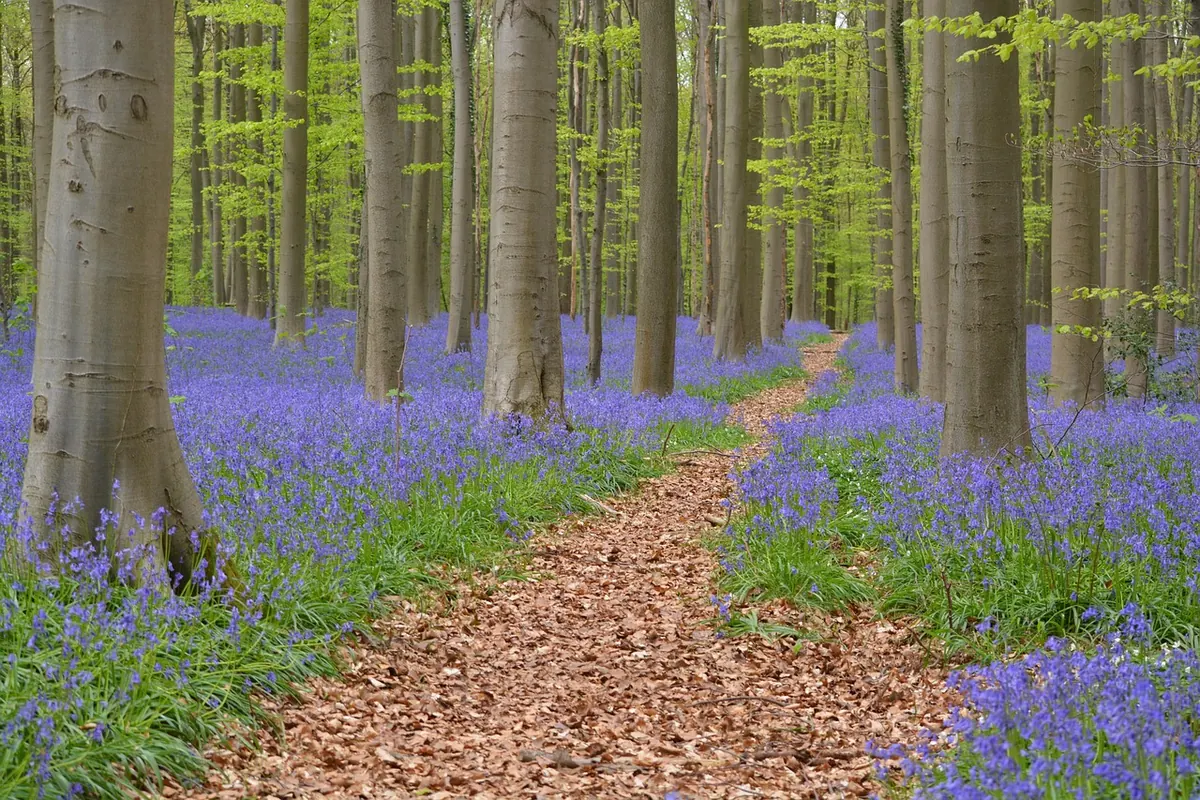
Most of the year, a bluebell patch looks like nothing at all: bare soil, a few weeds, maybe a marker you forgot to move. Then April arrives and the whole area turns blue. Nearly everything that makes that happen — root growth, bulb swelling, seed set — takes place when the flowers are long gone. So treat this calendar as a set of reminders rather than strict rules. Bluebells are forgiving plants, but they reward being left alone at the right moments.
The most common mistake is tidiness. A gardener who cuts back yellowing foliage in June because it looks untidy will get a thinner show the following spring, and no amount of feeding makes up for it. Read the sections below with that in mind: most of the "work" is really restraint, timed properly.
Know Which Bluebell You're Growing
Three plants share the name, and they don't want identical treatment.
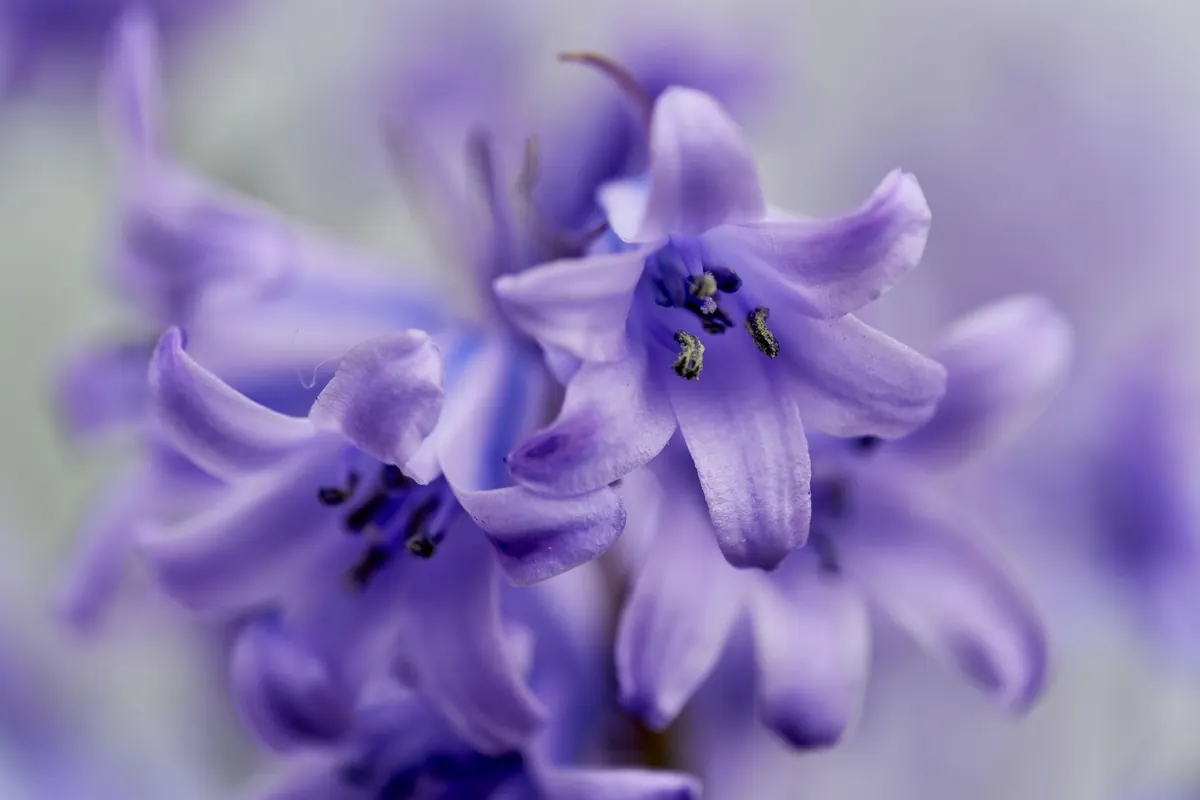
English bluebell (Hyacinthoides non-scripta) is the woodland native of Britain and Ireland: nodding, one-sided flower spikes in deep violet-blue, a sweet scent, and narrow leaves. It spreads by seed and slowly by offsets, and it is protected by law against being dug up from the wild in the UK — buy bulbs from a reputable nursery that stocks cultivated stock, never from a "wild" source.
Spanish bluebell (H. hispanica) stands upright, comes in paler blues and pinks, has broader leaves, and sets seed freely. It crosses with English bluebell, so if you garden near a native colony, don't plant it. If it is already there, deadhead it every year before the capsules ripen and remove any offsets that appear among your natives.
Virginia bluebell (Mertensia virginica) isn't a bulb at all but a spring ephemeral: pink buds opening to sky blue, then the entire plant vanishes by midsummer. It wants richer, damper soil and deeper shade than the bulb types. Because it disappears completely, plant it among hostas, ferns or hardy geraniums that will fill the gap in July.
September to November: Plant, Divide, Improve the Soil
This is the main planting window. The soil is still warm enough for roots to establish, but cool enough that top growth won't start until spring.
- Choose a spot with dappled light — under a deciduous tree, along a north-facing border, or in grass you can leave unmown until June. Deep, all-day shade gives you leaves and few flowers; full sun dries the bulbs out.
- Work leaf mould or composted bark into the top 20 cm. Skip fresh manure; it burns new roots. On heavy clay, add grit as well — bluebells hate sitting wet in winter.
- Set bulbs 10–12 cm deep and 10–15 cm apart, pointy end up. In grass, use a bulb planter and press the plug back firmly.
- Water in well, then mark the bed with a stake or a line of grit so you don't dig it up later. This matters more than it sounds: dormant bluebell bulbs look exactly like small stones.
If you'd rather not wait, bluebells sold "in the green" in spring settle in quickly. Plant them the day they arrive, water them, and keep them shaded for the first week.
Dividing an Overcrowded Clump
Overcrowded clumps bloom less each year — you get a mat of leaves and a scattering of flowers. Lift one with a fork while the leaves are still green, tease the bulbs apart, and replant at the same depth straight away. Water them in and let the foliage die back naturally wherever it lands. A division every three or four years keeps a patch vigorous.
Planting in Grass
Bluebell meadows work well, but only if you can commit to mowing late. Plant in irregular drifts rather than straight lines, and scatter a handful of bulbs at a time and plant them where they fall — the result looks far more like a wood than a row. Avoid the strip within 30 cm of a path edge, where foot traffic will compact the soil and break the shoots.
December to February: Mulch, Chill, Do Nothing
Bluebells need winter cold to flower well, so there is nothing to coax along. A 5–8 cm layer of leaf mould or composted bark over the bed is the whole job.
In cold regions where the ground heaves, wait until the soil has frozen before mulching, so you're not trapping warmth that invites early growth. In mild climates, mulch in late autumn instead. Keep the material clear of Mertensia crowns — they rot easily under a wet blanket.
Pots are the exception worth fussing over. Don't let them sit in saucers of water through the winter, and check them after hard frosts. Squirrels will dig around bulbs even when they aren't eating them; press any displaced bulbs back in and firm the soil. A layer of coarse grit on the surface discourages them, and a piece of wire netting pegged over a pot until March works just as well.
March to May: Bloom Care and What to Leave Alone
Shoots push up in late winter and the flowers last three to five weeks, depending on the weather. Warm, dry springs shorten the show, so water during dry spells. Mertensia wilts quickly in wind; soak the soil rather than the leaves.
Pick a few stems for the house. Bluebells last well in a cool room: cut the stems on a slant, use shallow water, and change it daily, since the sap is mucilaginous and clouds quickly. Take no more than a quarter of the flowering stems from any clump, and cut rather than pull — a tug can lift the whole bulb.
Leave the Leaves
This is the rule that carries the rest of the year. After flowering, the leaves go on working for six to eight weeks, feeding the bulb for next spring. Never tie them in knots, braid them or cut them down while they are still green. On a small, tidy bed you can disguise the dying foliage by interplanting with ferns, brunnera or hardy geraniums that have just begun to expand.
Seed or No Seed
Seed is how a patch spreads into a drift, so let native English bluebells set seed if you can tolerate the capsules. A single flowering spike can produce dozens of seeds, most of which drop within a metre of the parent. If you're growing Spanish bluebell near natives, cut the flowered stems off as soon as the petals fall — before the green seed pods swell — and bin them rather than composting them.
Bluebells are one of the few plants where patience pays twice: the year you do nothing in June is the year you get the best show in April.
June to August: The Quiet Season That Matters Most
By late June the foliage is collapsing and yellowing, and it is tempting to reach for the mower. Wait. Nothing in this calendar affects next spring's flowers more than what you do during these eight weeks.
- In grass: mow only once the leaves have completely collapsed and turned straw-brown — usually late June or early July in mild areas, a fortnight or so later in the north. Set the blade high for the first cut and rake off the clippings.
- In borders: leave the foliage until it detaches with a gentle pull, then clear it. If you must tidy, cut to within 5 cm of soil level, never flush with it.
- Watering: dormant bulbs in open ground need nothing, and summer irrigation on heavy clay is more likely to rot them than help. In pots, keep the compost barely moist — not bone dry, not wet.
- Weeding: hand-weed rather than hoe. A hoe at this depth decapitates bulbs that are sitting just below the surface.
- Marking: this is the moment to record where things are. After Mertensia disappears and the bluebell foliage is gone, every patch looks identical.
A Month-by-Month Quick Reference
- January: do nothing. Check pots after frost and replace any bulbs the squirrels have dug out.
- February: shoots appear; remove any winter mulch that has slumped over the crowns.
- March: water in dry spells, watch for slug damage on young shoots.
- April: peak bloom — enjoy it, cut a few stems, and start deadheading Spanish bluebell.
- May: flowers fade; leave every leaf in place and let Mertensia collapse on its own.
- June: foliage yellowing; first high mow of a meadow area only once it is fully down.
- July: clear strawy leaves from borders, hand-weed, and mark bare patches.
- August: order bulbs for autumn; divide nothing while dormant and dry.
- September–November: plant, divide, mulch with leaf mould.
- December: mulch in mild areas and check drainage in pots.
When Things Go Wrong
- Plenty of leaves, no flowers: almost always early mowing, too deep shade, or bulbs planted too shallow. Correct one of those and give it two years.
- Flowers smaller and sparser each year: the clump is congested. Divide it in late spring while still in leaf.
- Leaves shredded in April: slugs, or pheasants and pigeons pecking at the emerging shoots. A night patrol or a few beer traps usually settles it.
- Bulbs heaved out of the ground after frost: press them back and firm the soil; a winter mulch prevents a repeat.
- Blue and pink flowers appearing among your natives: Spanish bluebell has crossed in. Lift and remove the off-types, and be prepared to repeat for several years.
None of this demands much of you. Set the reminders, resist the urge to tidy in early summer, and the blue will take care of itself.
Photo: Juergen57BS / Pixabay